
Post
10 Lotus Evija
May
The Dawn of the Electric Titan: Why the Lotus Evija Redefines the Hypercar Era
https://en.wikipedia.org/wiki/Main_Page
In the high-octane world of ultimate performance, few names command as much respect as Lotus. For decades, the British manufacturer has been the world’s gold standard for lightweight engineering, precision handling, and a “driver-first” philosophy that prioritized the connection between man, machine, and the asphalt. But as the automotive industry shifts its gaze toward the horizon of electrification, the question arose: Could a brand defined by internal combustion soul survive—and thrive—in a silent, battery-powered future?
The answer arrived with a roar—or rather, a futuristic, high-frequency hum—that shook the foundations of the hypercar world. Enter the Lotus Evija.
With a price tag of $2,000,000 USD, the Evija is not just a car; it is a declaration. It is the bridge between the heritage of Hethel’s legendary racing tracks and the cutting-edge technology of the 21st century. Today, we dive deep into why the Evija isn’t just a highlight on our list of Ultimate Supercars; it is the benchmark for the future of performance luxury.
1. The Power of Four: A Powertrain Like No Other
To understand the Evija, one must first confront its physics-defying statistics. Lotus has equipped this beast with four individual electric motors, one at each wheel, producing a combined output of 2,000 horsepower. To put that in perspective, that is nearly double the output of some of the most celebrated internal combustion hypercars of the last decade.
The result isn’t just speed; it is an immediate, violent, and intoxicating acceleration. The Evija launches from 0 to 60 mph in under 3 seconds. However, that static number hardly tells the full story. Because electric motors provide maximum torque from 0 RPM, the Evija doesn’t need to “build” power. It strikes like a lightning bolt. With a top speed of over 200 mph, the Evija ensures that it isn’t just a track-day toy, but a high-speed projectile designed to carve through the atmosphere with relentless efficiency.
2. The Lotus Philosophy: Lightweight Engineering in an EV World
The single biggest challenge for electric vehicles has always been weight. Batteries are heavy, and heavy cars generally handle poorly. For a brand like Lotus, whose motto has always been “Simplify, then add lightness,” an EV could have easily been an existential crisis.
Instead, Lotus turned the challenge into a masterpiece. By utilizing a bespoke carbon-fiber monocoque chassis, the Evija maintains a level of rigidity and agility that feels alien for an electric vehicle. The engineers at Hethel didn’t just add power; they obsessively managed the weight distribution, ensuring that the car stays glued to the road through tight corners and high-speed sweepers. The Evija proves that electrification does not mean the end of the “Lotus feel.” It is still a vehicle that rewards the driver for being brave, offering a level of tactile feedback that is practically unheard of in the electric segment.
3. Design as Art: Aerodynamics and the “Porosity” Concept
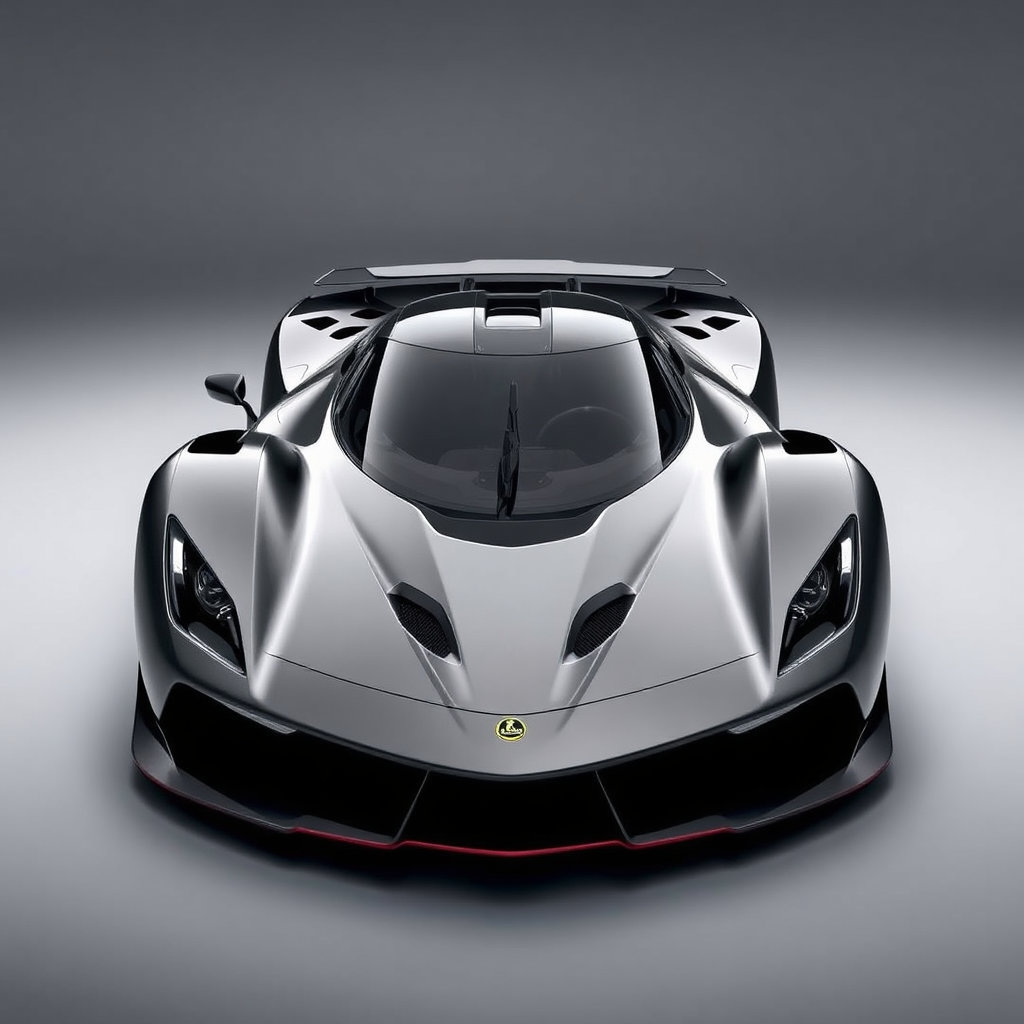
Look at the Evija from any angle, and you are struck by its otherworldly silhouette. This isn’t a car designed by a wind tunnel alone; it is a car designed to manage the air in a way that feels organic.
The defining feature of the Evija is its “porosity.” The car features two massive venturi tunnels that channel air through the rear bodywork. This dramatic architectural choice isn’t just for aesthetic shock value—though it certainly achieves that—it is a functional marvel. By allowing air to pass through the car, Lotus has minimized drag while maximizing downforce. It creates a vacuum effect that keeps the car sucked to the pavement. When you see the Evija, you aren’t just looking at a vehicle; you are looking at the wind being sculpted into physical form.
4. The Driver-Focused Cockpit: A Sanctuary for the Enthusiast
Step inside the Lotus Evija, and you are greeted by an interior that manages to be both minimalist and intensely high-tech. In an era where many cars are cluttering their dashboards with unnecessary screens and distracting gimmicks, the Evija doubles down on the driver.
The cockpit is a masterclass in ergonomics. The steering wheel is inspired by Formula 1, featuring all the essential controls right at your fingertips. The seats are bespoke, hugging the driver with the kind of support required to handle the G-forces that 2,000 horsepower can generate. The cabin feels less like a car interior and more like the cockpit of a fighter jet. It is a space designed to remove all obstacles between the driver and the road, focusing entirely on the visceral act of driving.
5. Exclusivity: The Rarity of the Future
With a limited production run, the Evija is destined to become a collector’s item almost immediately. Owning an Evija isn’t just about having the money to buy a $2,000,000 machine; it is about belonging to a select group of pioneers who are witnessing the evolution of the species.
Lotus has historically been a brand for the purist, the enthusiast who knows the technical specs of their suspension geometry as well as they know their favorite highway. The Evija carries that spirit forward. It carries the weight of Lotus’ racing heritage—from the F1 championships of the 60s and 70s to the legendary Esprit—and infuses it with the clean, bold promise of electric performance.
6. Why the Evija Matters for the Future of Performance
The transition to electric hypercars is often met with skepticism by traditional enthusiasts. We worry about the soul of the car. We worry that the loss of the engine note will signify the loss of the “passion” in performance.
The Lotus Evija is the definitive answer to that skepticism. It shows that electricity isn’t a compromise; it is an evolution. It offers a cleaner, faster, and more precise way to achieve the thrill of driving. By choosing not to emulate the past but to innovate the future, Lotus has positioned itself at the very front of the pack.
The Evija is not just the most powerful production Lotus ever built; it is a testament to the brand’s enduring spirit. Whether it’s the way the light hits the carbon fiber tunnels or the sheer thrill of 2,000 horsepower pinning you into your seat, the Evija reminds us that the passion for performance is not defined by how a car is powered, but by how it makes the driver feel.
The Verdict: A New Icon
As we look at the landscape of ultimate supercars, it is clear that the bar has been raised. The Lotus Evija represents the confluence of British engineering tradition and the limitless potential of modern technology. It is a reminder that in the world of high-performance automobiles, we don’t have to choose between the future and our values. We can have both.
For those lucky few who will put an Evija in their garage, you are not just buying a hypercar. You are buying a piece of history—a marker in time that signifies the moment we left the era of combustion and entered the age of the electric titan.
The Lotus Evija: 2,000 horsepower. Zero emissions. Uncompromised soul.
This is the future of performance, and it looks faster than anything we’ve ever seen before.
https://zenopen.click/category/post
