
Post
9 Pagani Huayra Imola
May
The Alchemy of Speed: Why the Pagani Huayra Imola Defines the Pinnacle of Automotive Art
https://en.wikipedia.org/wiki/Main_Page
In the world of high-performance machinery, there is a distinct line that separates a “fast car” from a “hypercar.” Then, there is the line that separates a “hypercar” from a “rolling masterpiece.” When we talk about the ultimate expression of the passion for performance, we are no longer discussing mere transportation or even track-day toys. We are talking about the alchemy of speed—the point where engineering precision meets human obsession.
At the epicenter of this automotive nirvana sits the Pagani Huayra Imola. With a price tag of $5.4 million and a production run limited to just five units worldwide, the Imola isn’t just a car; it is a declaration of what is possible when the constraints of mass production are completely discarded in favor of pure, undiluted excellence.
The Pursuit of Perfection: Beyond the Spec Sheet Pagani Huayra Imola
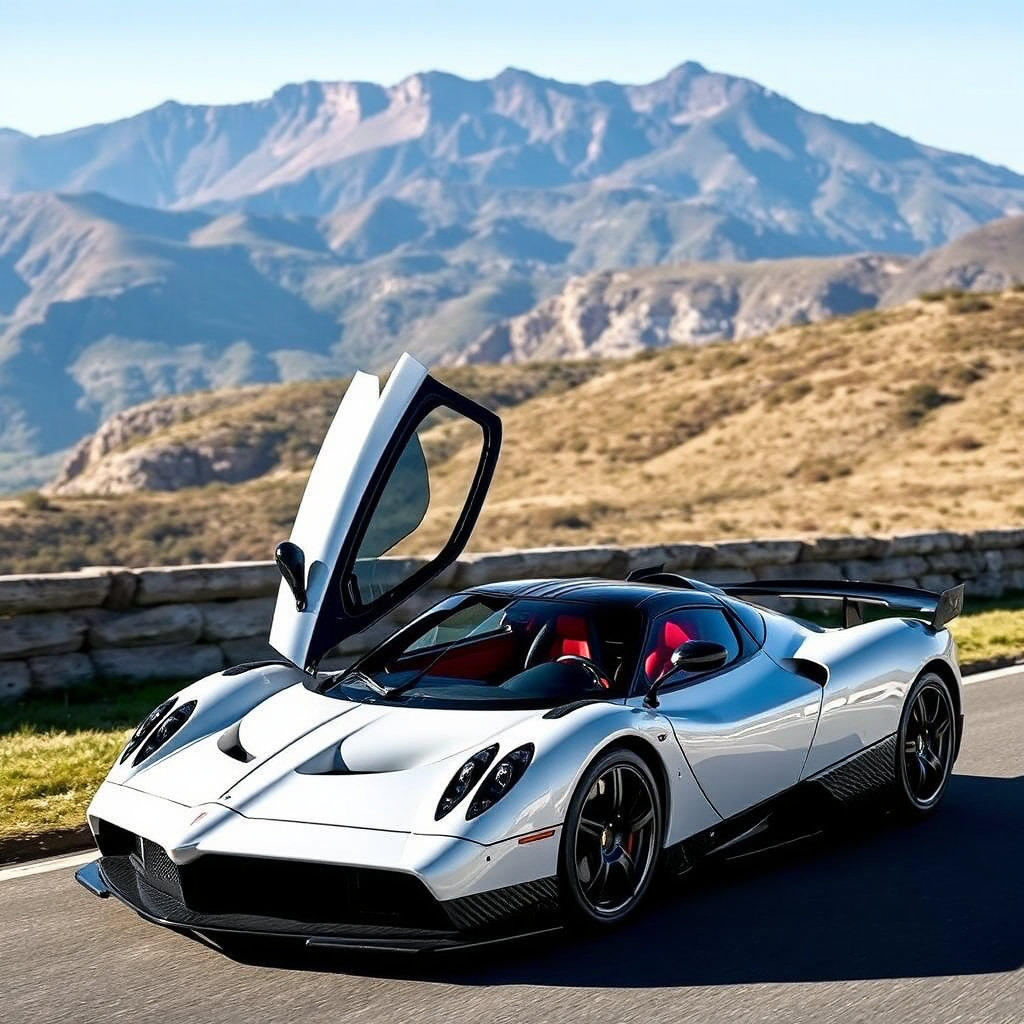
When you first lay eyes on the Huayra Imola, you don’t see a vehicle; you see a sculpture shaped by the wind. The “Passion for Performance” theme that drives the supercar industry finds its most eloquent voice here. Most manufacturers build cars to satisfy market demands or efficiency standards; Horacio Pagani builds cars to satisfy the soul.
The Imola was born out of a rigorous testing program, named after the legendary Autodromo Internazionale Enzo e Dino Ferrari circuit in Italy. It was there that the car underwent over 16,000 kilometers of relentless track testing. Pagani didn’t just want to build a fast car; they wanted to build a car that felt alive, connected to the driver, and capable of dominating the most challenging corners in the world.
The Heart of the Beast
Powering this mechanical titan is a 6.0-liter twin-turbo AMG V12 engine, specifically engineered for the Huayra. Producing a staggering 827 horsepower, this engine is more than just a source of propulsion—it is a symphony of combustion. In an era where the industry is rapidly transitioning toward hybrid and electric power, the Imola remains a defiant celebration of the internal combustion engine.
The power delivery is linear, relentless, and accompanied by a soundtrack that reverberates through the carbon-fiber chassis. It is not just about the raw numbers on a spec sheet; it is about the visceral experience of the acceleration, the way the boost builds, and the precision with which the power is translated to the asphalt. Pagani Huayra Imola
The Engineering of Art: Carbon-Titanium Excellence
The secret to the Imola’s breathtaking agility lies in its construction. Pagani has pioneered the use of Carbo-Titanium—a weave of carbon fiber and titanium—that offers the strength of metal with the lightness of advanced composites. This monocoque chassis is the backbone of the car, providing the structural rigidity required to handle the immense forces generated by its active aerodynamics. Pagani Huayra Imola
The Dance of Active Aerodynamics
One of the most fascinating aspects of high-end hypercars is how they interact with the air. The Imola features a highly complex, active aerodynamic system. Flaps on the front and rear of the vehicle move independently based on the car’s speed, steering angle, and braking input. This means the car is constantly “thinking,” adjusting its downforce to keep the tires glued to the road whether you are attacking a high-speed sweeper or braking late into a hairpin turn.
It is this constant, invisible dance that makes the Imola feel so much lighter than it actually is. It transforms the driving experience from a fight against physics into a seamless collaboration with them.
An Interior of Opulence and Intent
Step inside the cabin, and you are transported into a world that feels more like an upscale watchmaker’s boutique than a cockpit of a race car. Every switch is milled from billet aluminum; every stitch is applied by hand; every surface is either covered in the finest Italian leather or exposed, raw carbon fiber.
The passion for performance here is balanced by an uncompromising commitment to luxury. There are no gimmicky digital screens distracting you from the road. Instead, there are analog gauges that look like they belong in a vintage timepiece, providing the driver with the essential information without breaking the sensory harmony of the cabin. It is a space designed for one purpose: to allow the driver to focus entirely on the act of driving.
The Rarity Factor: Why Exclusivity Matters
Why spend $5.4 million on a vehicle? The price is, of course, a reflection of the materials and the R&D, but it is also a gateway to a club that almost nobody can join. With only five units in existence, the Huayra Imola is one of the most exclusive automobiles in history.
For the collector, this isn’t just an asset that will appreciate in value—though it certainly will. It is the ultimate trophy. It represents the pinnacle of the “Ultimate Supercar” movement. It stands as a monument to the vision of Horacio Pagani, an individual who refused to compromise on his artistic vision despite the pressures of the automotive industry.
Passion for Performance: The Philosophy of the Imola
The theme of “Passion for Performance” often gets diluted in the modern age. We see cars that are “fast” due to software updates or clever torque vectoring systems. But the Pagani Huayra Imola is different. It is analog in spirit, even if it is digital in its precision. It is a car that demands respect. It is not designed to be driven by everyone; it is designed to be mastered by those who truly understand the craft of driving.
When you drive an Imola, you aren’t just getting from point A to point B. You are engaging in a dialogue with a machine that has been built with the same level of care that a luthier puts into a violin or a painter puts into a canvas. Every bolt, every vent, and every curve has a reason for existence.
The Legacy of the Huayra
As the automotive world pivots toward autonomy, electrification, and mass-market connectivity, the Huayra Imola stands as a defiant lighthouse for enthusiasts. It reminds us why we fell in love with cars in the first place: the smell of high-octane fuel, the roar of a V12 engine climbing to its redline, the tactile feedback of the steering wheel through a high-speed corner, and the sheer beauty of a well-engineered machine.
Owning or even witnessing an Imola is a rare privilege. It serves as a benchmark by which all other supercars must be measured. It proves that performance is not just a function of speed, but a function of emotion.
Conclusion: A Rolling Masterpiece
The Pagani Huayra Imola is more than just a car; it is the ultimate expression of human ingenuity. It bridges the gap between the racetrack and the art gallery, proving that performance and beauty are not mutually exclusive—rather, they are two sides of the same coin.
For the five lucky individuals who own one, the Imola represents the culmination of a lifelong dream. For the rest of us, it remains a North Star—a symbol of what can be achieved when a team of passionate engineers and artists decide to ignore the rules and build something purely for the sake of excellence.
In the grand narrative of automotive history, the Huayra Imola will always be remembered as the car that didn’t just push the boundaries of physics, but redefined the soul of the machine. It is, unequivocally, the pinnacle of the supercar world. Whether it is locked in a private collection or tearing up a sun-drenched mountain pass, the Imola remains a testament to the fact that, when it comes to the passion for performance, there is simply no substitute for the Pagani touch.
https://zenopen.click/category/post
